For the new permanent exhibition at the Haus der Geschichte in Bonn, we developed six interconnected and highly participative media installations – from the Prologue at the entrance, through four interactive stations within the exhibition route, to the Epilogue.
The result is a continuous media narrative that shifts the focus within the museum: away from the object alone and toward the visitors themselves. History is not merely observed, but compared, reflected, and expanded through one’s own biography. Each station invites a personal decision, a memory, or a stance – making visible that visitors themselves are part of historical processes.
WHAT'S YOUR NAME?
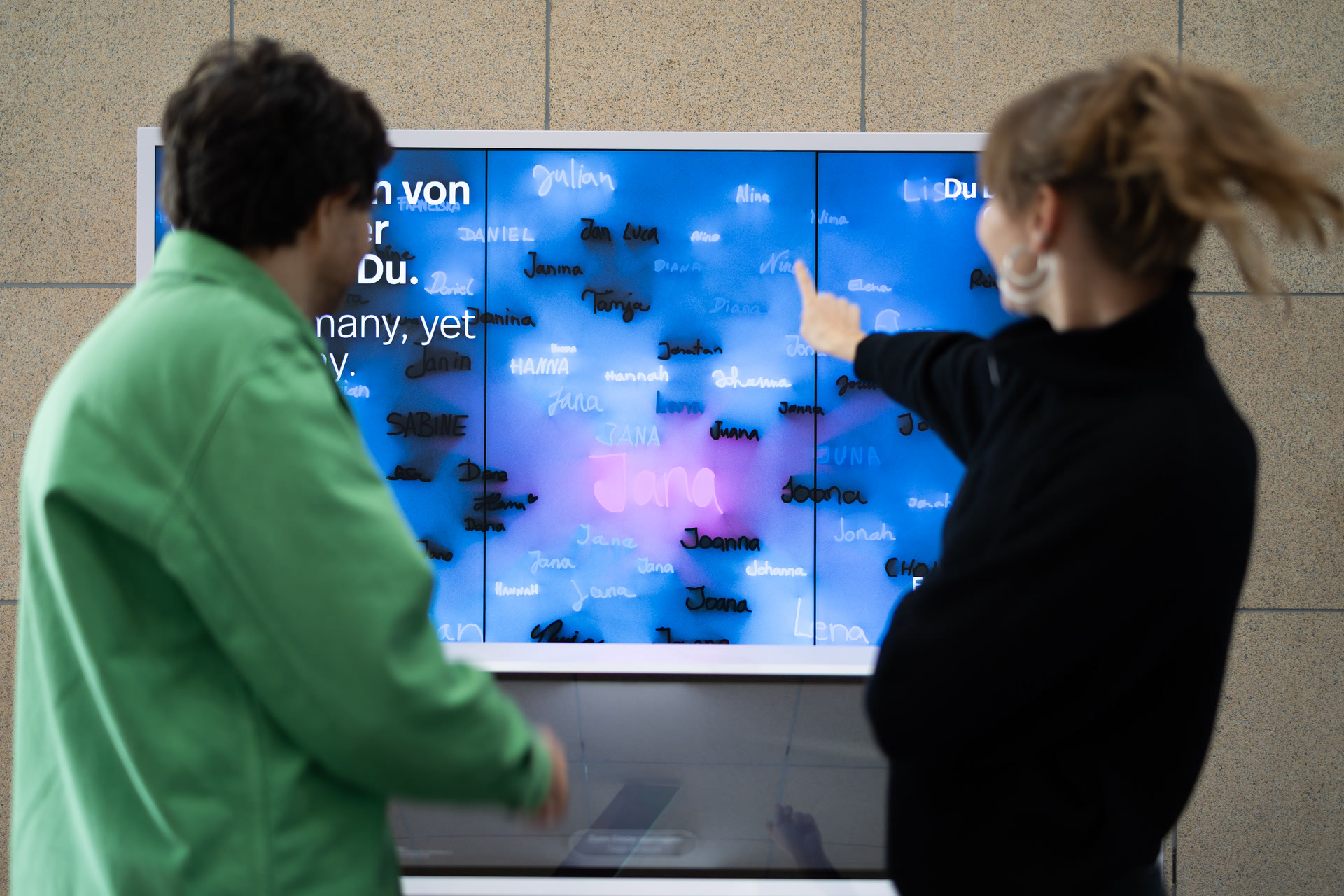
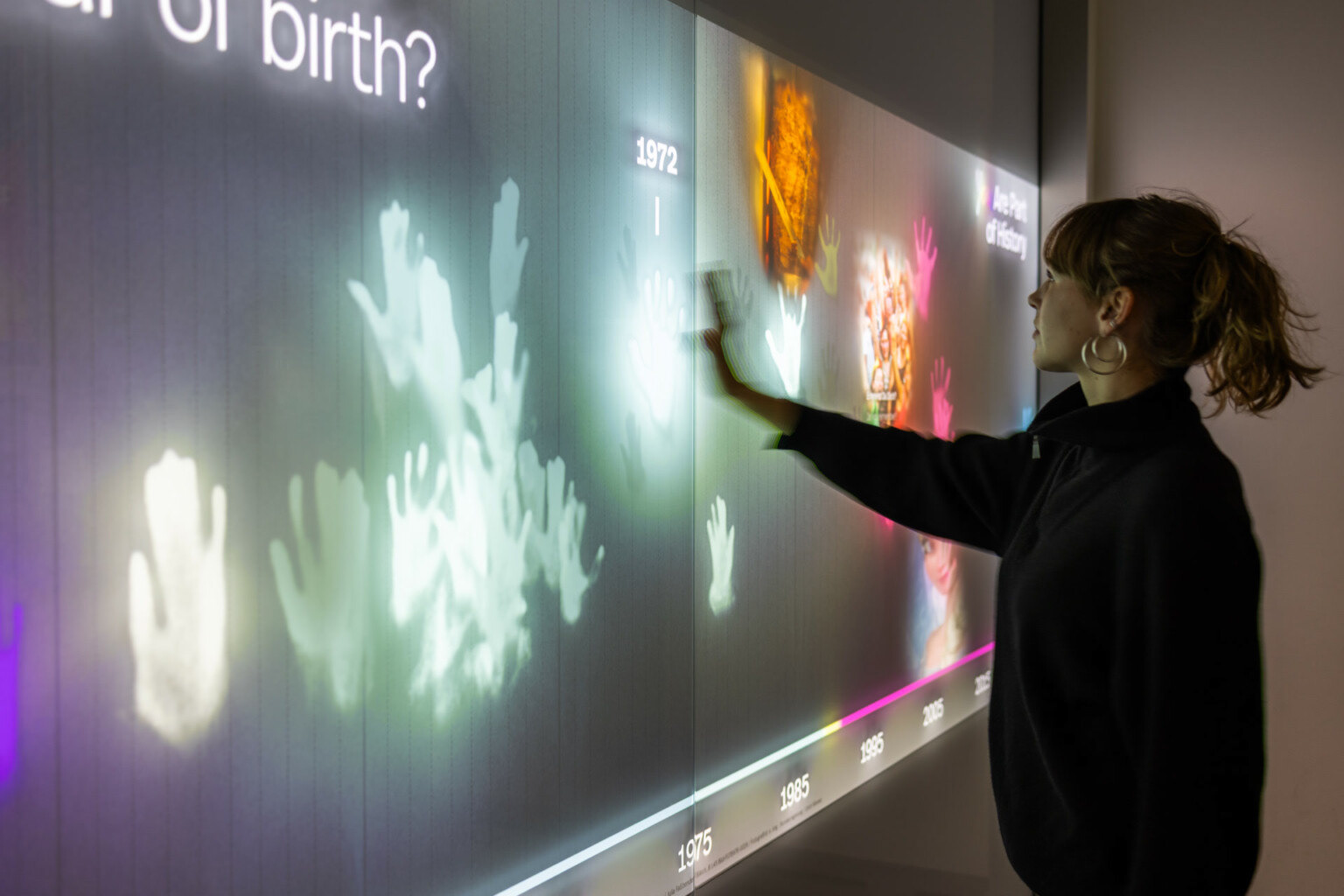
At this installation, visitors are asked for their first name. They write it with their finger – it is automatically recognized, and a personalized film begins: the name appears on large screens, is historically contextualized, and placed in relation to others. How popular was it? When did it peak? How many people here share it?
At this installation, visitors are asked for their first name. They write it with their finger – it is automatically recognized, and a personalized film begins: the name appears on large screens, is historically contextualized, and placed in relation to others. How popular was it? When did it peak? How many people here share it?
Handwriting is recognized using AI, supported by a locally running large language model, while two datasets form the foundation for the installation: the most popular first names of the past 100 years and all names written on-site.
In the end, a personal name map is generated: the visitor’s own name at the center, surrounded by related names. The greater the distance, the weaker the linguistic relationship. The visualization is generated as a force-directed graph with clusters and semantic distances.
WHAT MOVES YOU?
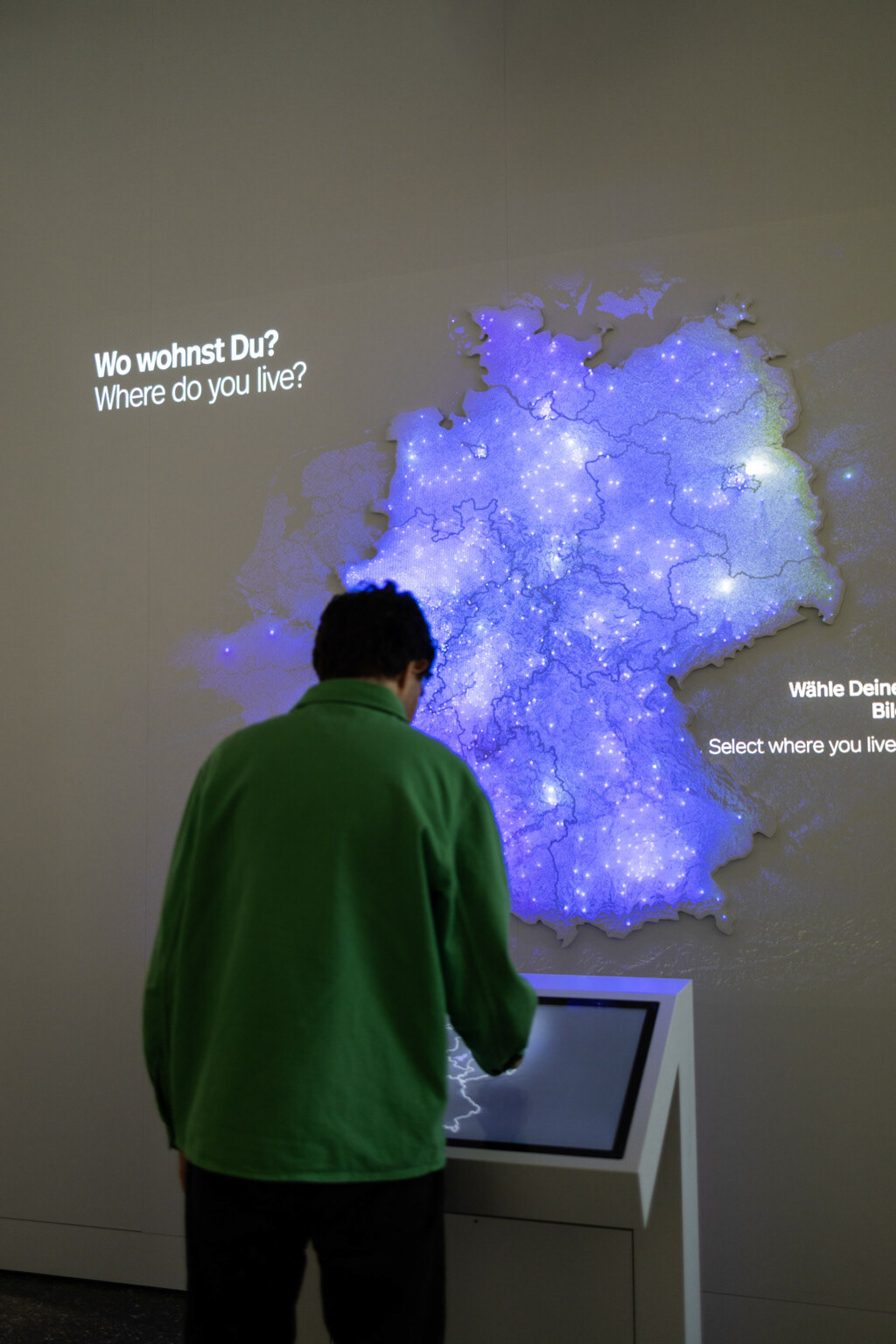
This installation focuses on the present and civic engagement. Visitors select the issue that currently matters most to them – peace, environment, equality, or prosperity. By turning a mechanical crank, they symbolically generate energy. Alone or together: collaboration makes it easier. In the end, an overview reveals which topics have received the most collective energy.
This installation focuses on the present and civic engagement. Visitors select the issue that currently matters most to them – peace, environment, equality, or prosperity. By turning a mechanical crank, they symbolically generate energy. Alone or together: collaboration makes it easier. In the end, an overview reveals which topics have received the most collective energy.
The crank movement is translated in real time into a dynamic light and energy visualization. A reactive soundscape reinforces rhythm and playfulness. Energy serves as a visual metaphor and feeds into an aggregated overview that makes collective priorities visible.
PROLOGUE
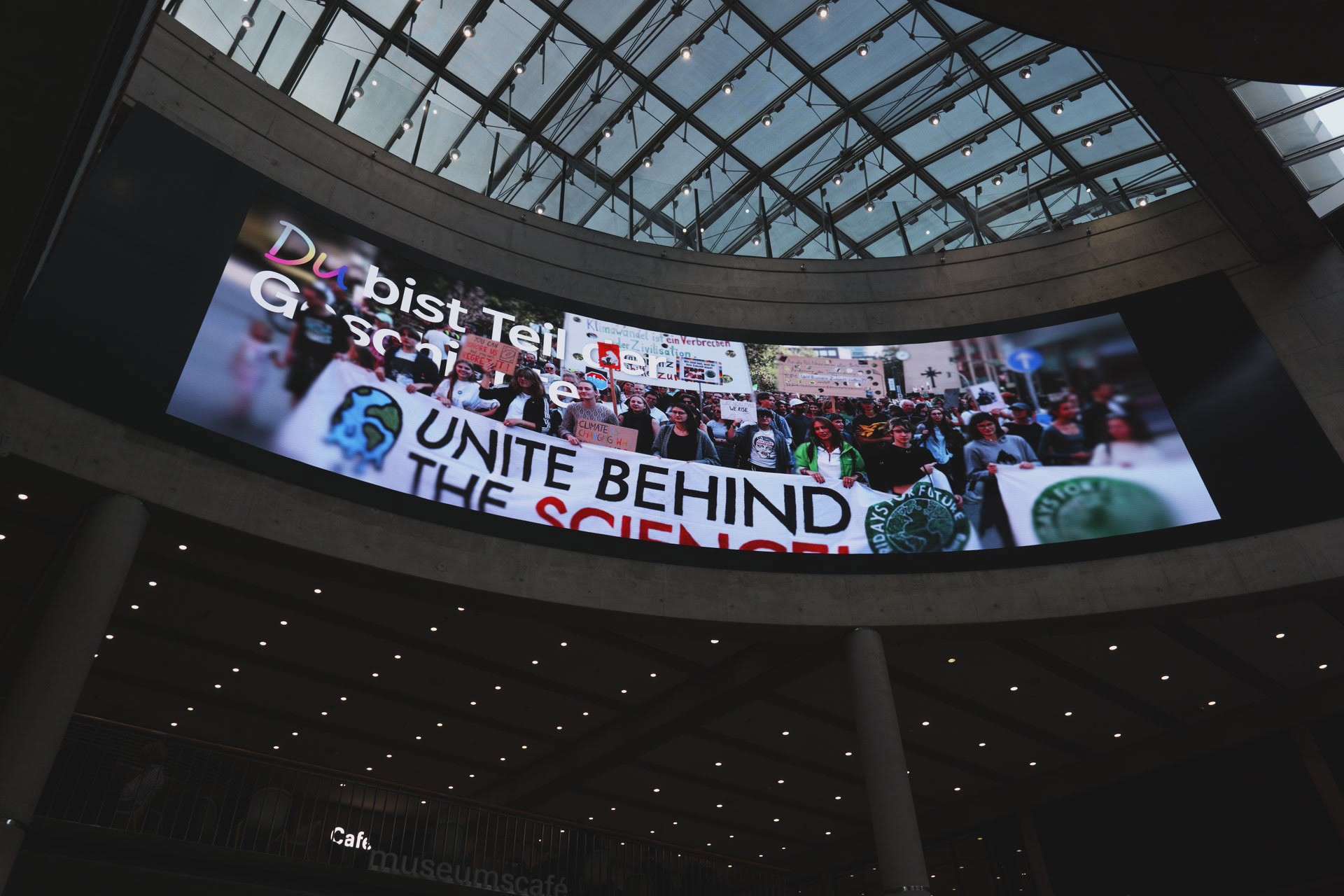
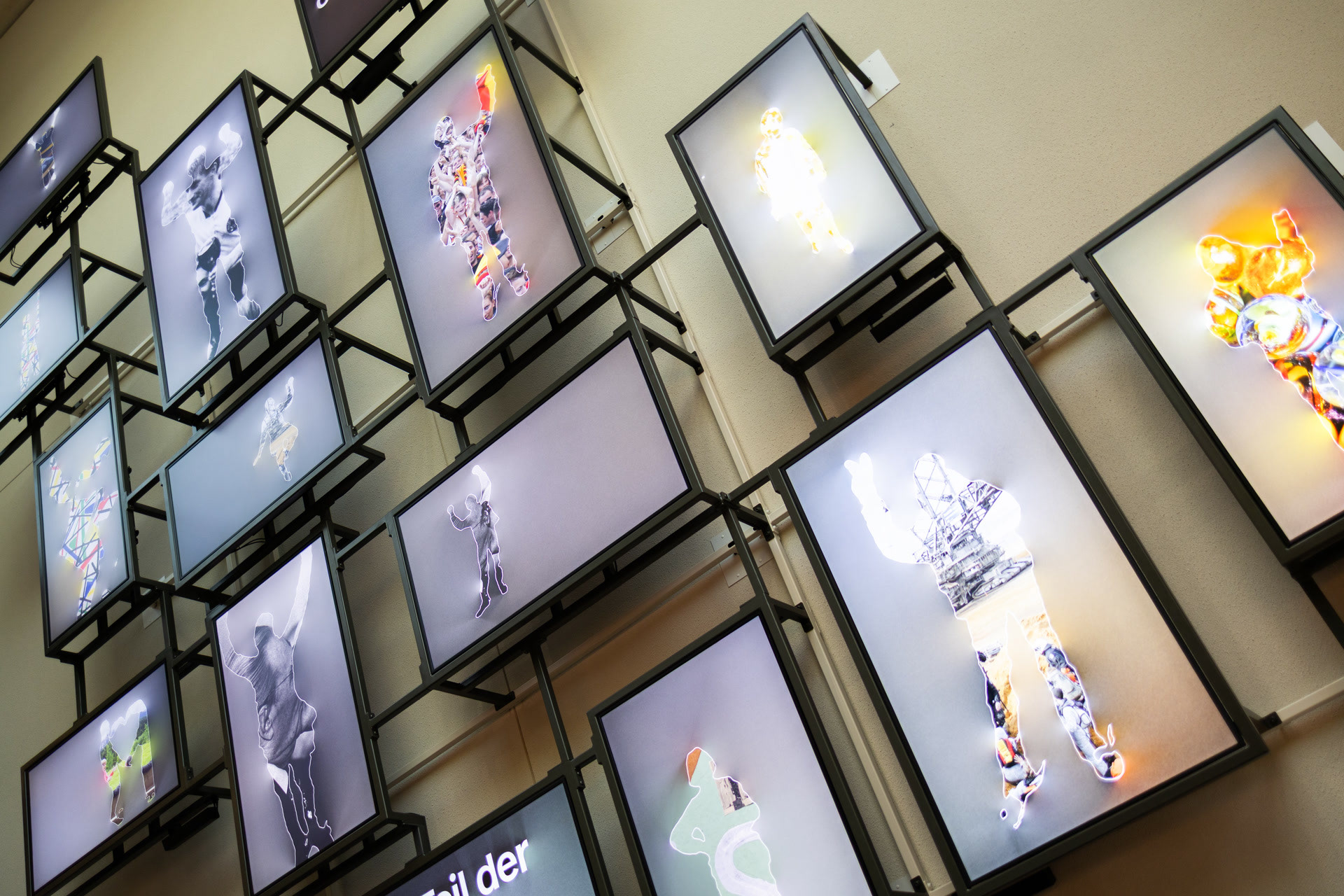
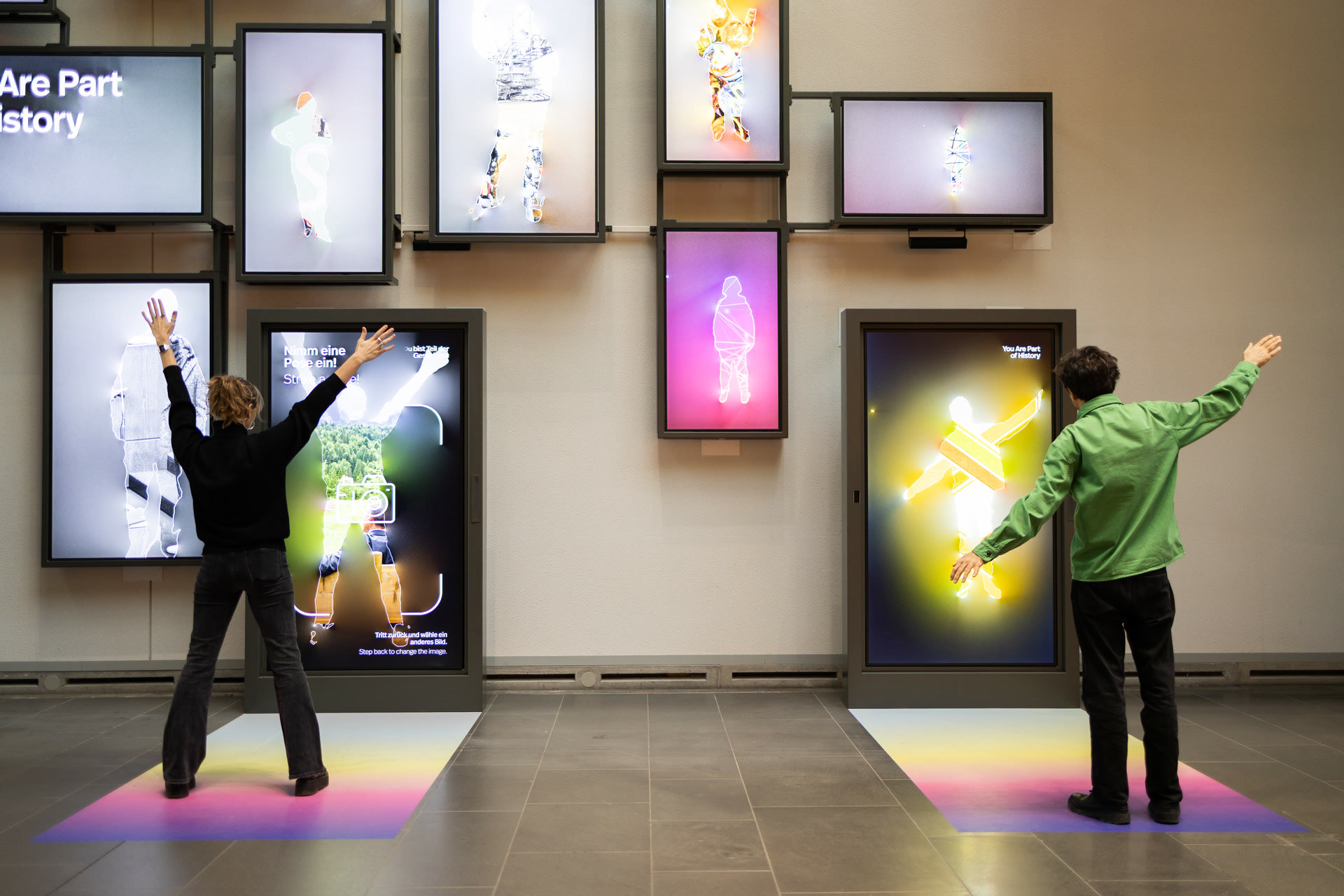
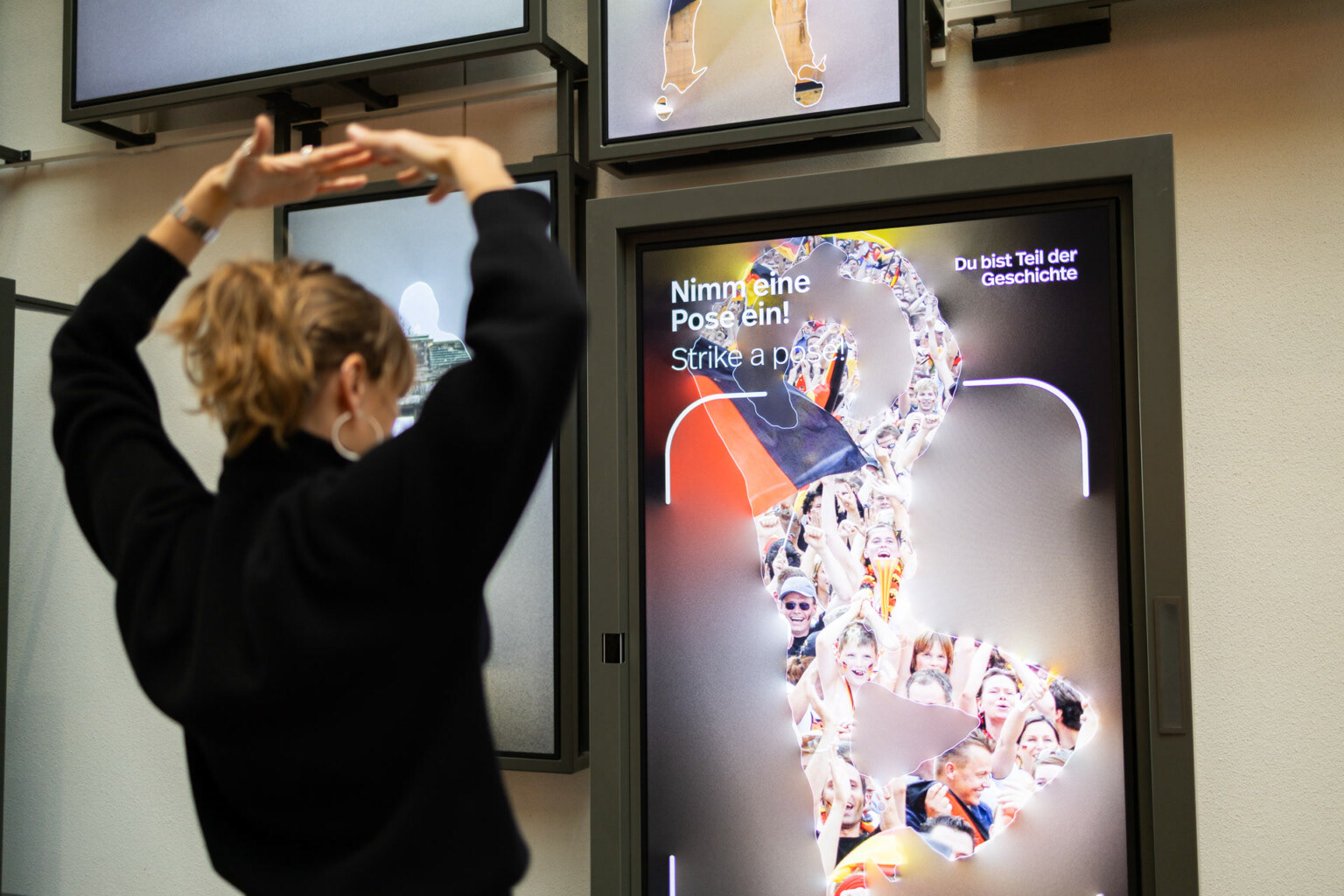
Right at the entrance, the exhibition theme becomes literally visible: visitors become part of iconic photographs of German history – from post-war imagery to contemporary movements such as Fridays for Future. Viewers become actors. Their silhouettes enter historical image spaces – first revealed, then deliberately integrated.
Right at the entrance, the exhibition theme becomes literally visible: visitors become part of iconic photographs of German history – from post-war imagery to contemporary movements such as Fridays for Future. Viewers become actors. Their silhouettes enter historical image spaces – first revealed, then deliberately integrated.
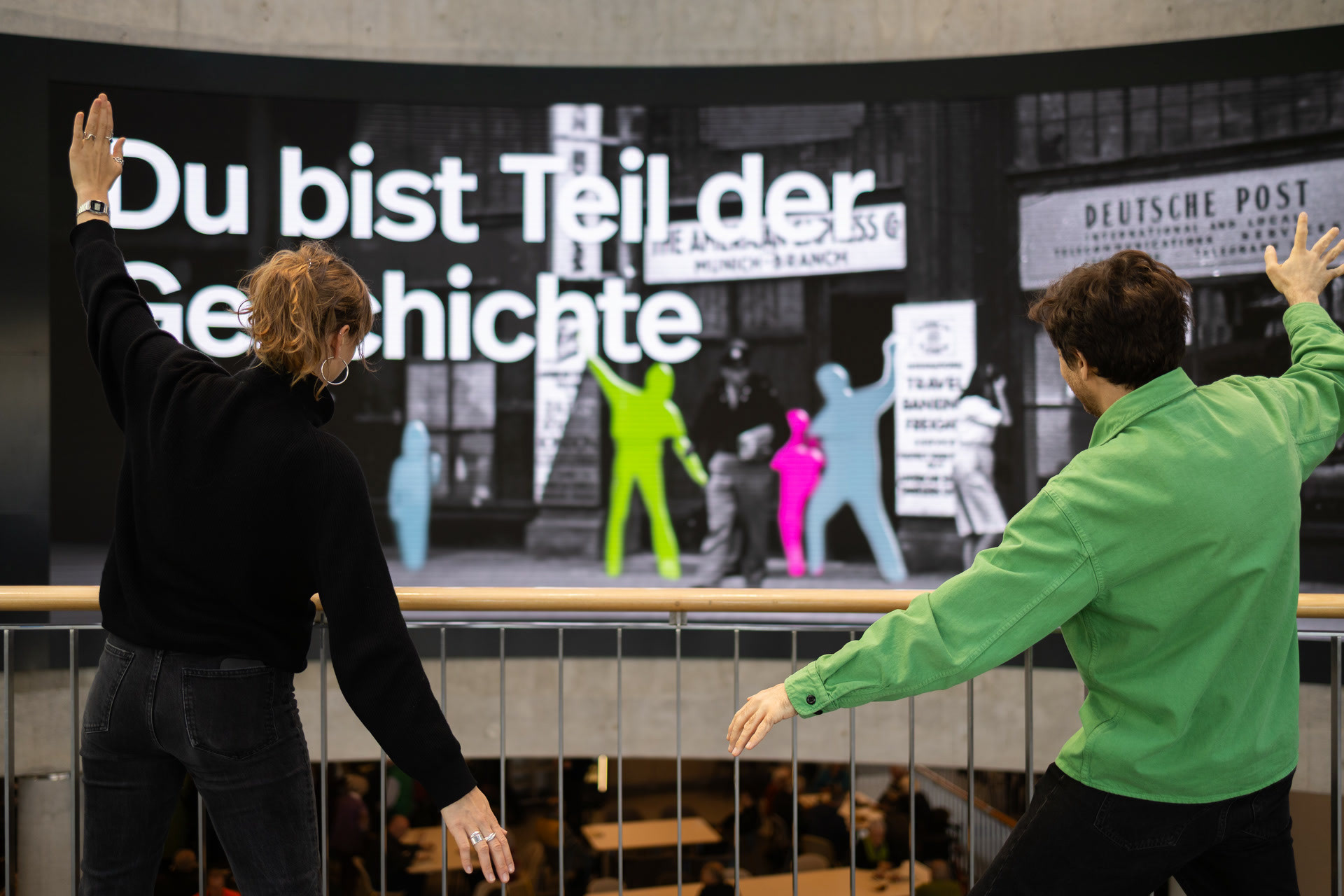
A high-resolution curved LED wall creates an immersive spatial experience, visible both from the balcony and from the foyer below. Using AI-based object detection (YOLO), people are segmented, assigned stable IDs and individual colors, and placed into three-dimensional image spaces.
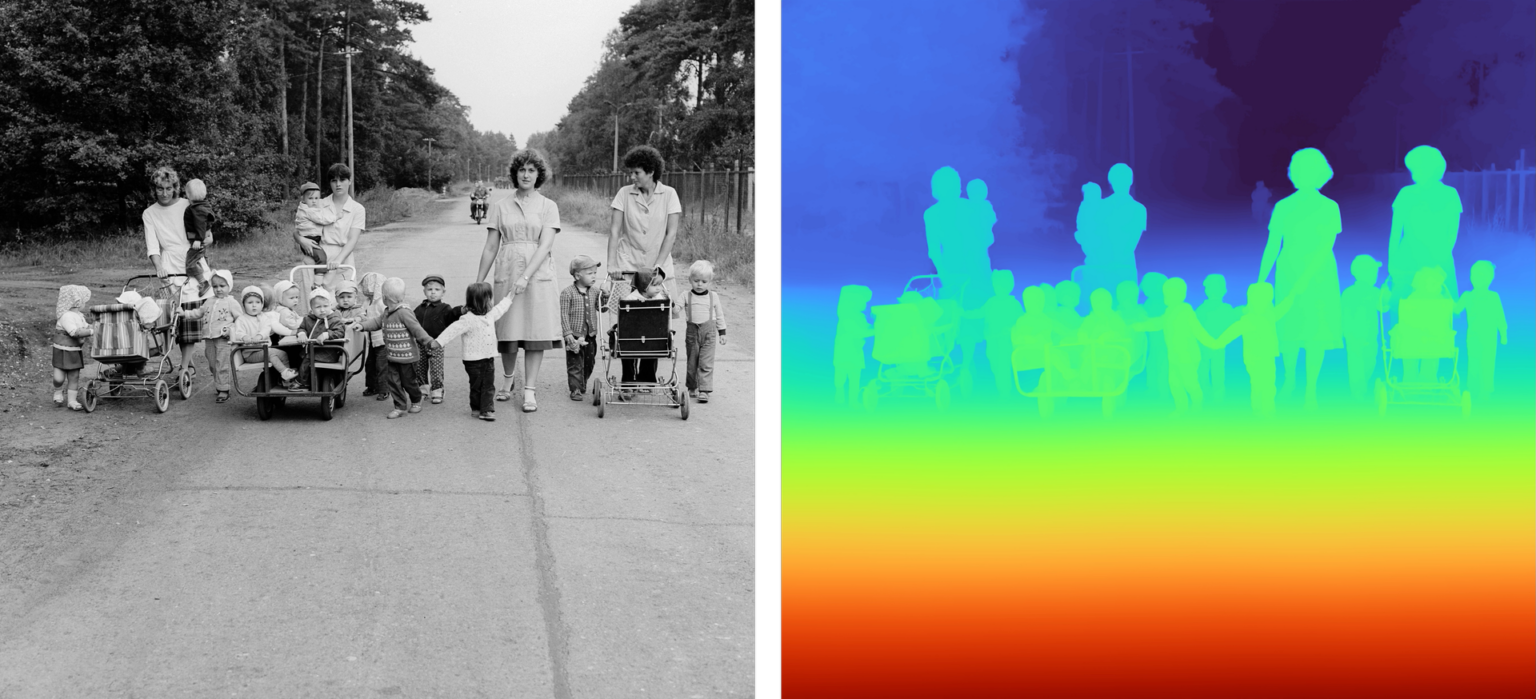
For the historical motifs, we generated AI-based depth maps, developed a custom tool for correction and overlap control, and introduced subtle camera movements to create a nuanced 3D effect. A dedicated shader pipeline compensates for architectural obstructions such as the railing. A reactive soundscape responds to movement direction, enhancing immersion.
Credits:
Client: Stiftung Haus der Geschichte der Bundesrepublik Deutschland
Contractor: SCHNELLE BUNTE BILDER
My role: Art Direction, Design, Code and Realisation
Sound Scenography: kling klang klong
Initial Concept: Kossmanndejong, YIPP
Integration AV systems: 235 Media
Client: Stiftung Haus der Geschichte der Bundesrepublik Deutschland
Contractor: SCHNELLE BUNTE BILDER
My role: Art Direction, Design, Code and Realisation
Sound Scenography: kling klang klong
Initial Concept: Kossmanndejong, YIPP
Integration AV systems: 235 Media